
Wartime Heritage
ASSOCIATION
Remembering World War II
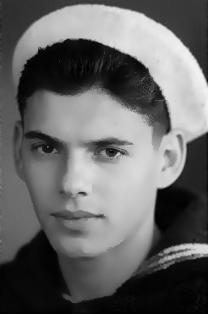
Francis Joseph Glassett

Name:
Francis Joseph Glassett
Rank:
Seaman First Class
Service Number:
2016062
Service:
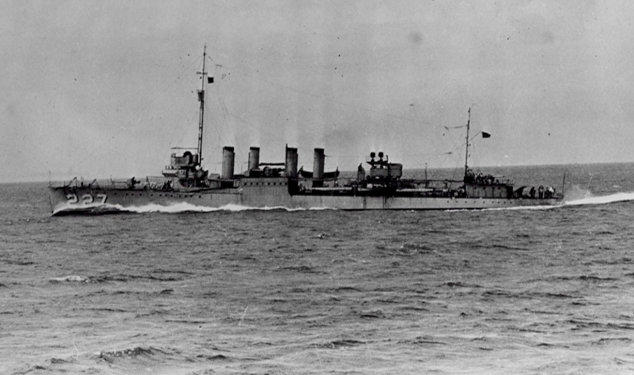
USS Pillsbury (DD-227), United States Navy
Awards:
Purple Heart, US Navy Combat Action Ribbon,
American Defense Service Medal; Fleet clasp,
Asiatic-Pacific Campaign Medal; 2 battle stars,
Philippine Presidential Unit Citation,
Philippine Defense Medal,
US Army Presidential Unit Citation, WWII Victory Medal
Date of Birth:
October 11, 1920
Place of Birth:
Somerville, Middlesex Co., Massachusetts
Date of Enlistment:
November 10, 1937
Place of Enlistment:
Boston, Massachusetts
Address at Enlistment:
Somerville, Middlesex Co., Massachusetts
Age at Enlistment:
17
Occupation:
Student
Marital Status:
Single
Religion:
Romnan Catholic
Date of Death:
March 2, 1942
Age:
21
Memorial:
Manila American Cemetery and Memorial, Philippines
Reference:
Walls of the Missing
Francis Jr. was the only child of Francis Joseph ‘Frank’ Glassett Sr. (1876-1938) and Joanna Crosskill ‘Anna’
(Betcher) Glassett (1881-1963). His father Frank Sr. was born in East Boston, Suffolk Co., Mass., and Anna
was born in Pugwash, Cumberland Co., Nova Scotia. She emigrated from Nova Scotia in 1898 and became a
U.S. citizen in 1914. His parents married in 1913 in Somerville, Mass.
Francis Jr. graduated from Somerville High School on June 9, 1937. That fall, he applied for enlistment in
the U.S. Navy. He filled out the enlistment forms and obtained his father's permission to enlist for four
years. After completing a physical and dental exam, Francis was accepted. He was sworn into the U.S. Navy
at the Navy Recruiting Station (NRS) in Boston on November 10, 1937, as an Apprentice Seaman. Next, he
transferred to the Naval Training Station (NTS) at Newport, Rhode Island, for three months of recruit
training.
Francis graduated from recruit training in early February 1938. He was granted 10 days of leave to visit
family and friends before being assigned to a ship of the U.S. Fleet. Upon completion of his leave and
return to NTS Newport, he was transferred to the Receiving Ship at the Philadelphia Navy Yard as a member
of the pre-commissioning crew of the light cruiser USS Savannah (CL-42). Upon her commissioning on March
10, 1938, he reported on board for duty with many hundreds of other officers and men. After operations in
the Atlantic and Caribbean Sea over the next year, Savannah prepared to change her homeport from
Norfolk, Virginia, to a West Coast port. On May 26, 1939, Savannah transited the Panama Canal en route to
San Diego, arriving on June 17, 1939. Her new homeport would soon be Long Beach, California. During his
tour of duty on Savannah, Francis advanced to Seaman Second Class (S2c).
On November 12, 1939, he detached from Savannah with orders to report to the Asiatic Station, Manila,
Philippines, and the Clemson-class destroyer USS Pillsbury (DD-227) for duty. He was to travel across the
Pacific via the repair ship USS Medusa (AR-1) for further transfer to the transport ship USS Henderson (AP-
1). Francis boarded Medusa in San Diego for the short trip to San Pedro, California, where he boarded
Henderson on November 15, 1939. She steamed up the coast to San Francisco Bay on November 18 where
she was to undergo a period of maintenance at Mare Island. Underway on December 4, 1939, she steamed
under the new Golden Gate Bridge bound for Hawaii, making Honolulu on December 11. She departed
Honolulu on December 14 and made passage to Guam, arriving on December 27. She departed Guam on
December 29 and spent New Year's 1940 at sea en route to Manila, where she arrived on January 3, 1940.
Francis disembarked from Henderson upon arrival and reported on board Pillsbury on January 6, 1940, for
duty.
Japanese aggression continued to increase in East Asia during 1940, forcing many foreign governments to
begin withdrawing their ground-based forces and the majority of their naval forces, as well as evacuating
military and civilian expatriates from China. By the autumn of 1940, the unstable international situation in
the region and Japan's persistent aggression made the presence of Asiatic Fleet ships untenable. Adm.
Thomas C. Hart, the Commander in Chief, U.S. Asiatic Fleet, ordered the withdrawal of all major Navy blue-
water ships from China on October 21, 1940, leaving only the gunboats on the Yangtze. When USS Peary
(DD-226) departed from Shanghai a short time later, it marked the end of the U.S. Navy's blue-water ship
presence in Chinese ports. As the Asiatic Fleet reduced its presence in China, its operations indefinitely
shifted to the Philippine Archipelago.
On November 16, 1940, Francis advanced in rate to Seaman First Class (S1c). One week later on November
23, he transferred to the destroyer tender USS Black Hawk (AD-9) for treatment of an illness. He returned
to duty on board Pillsbury on November 30, 1940.
The threat of hostilities between the U.S. and Japan grew closer to the boiling point as the year 1941
began. In July 1941, as Japanese aggression intensified with their move south into lower Indo-China,
Admiral Hart warned his officers that he had no doubt war would come, although he didn't know how or
when hostilities would start. Hart trained his destroyer crews hard, keeping them on a war-footing for
extended periods and away from Cavite Naval Base as much as possible by exercising his "defensive
deployment." About October 15, 1941, while engaged in maneuvers, Pillsbury and Peary collided, causing
serious damage to Peary. Both headed for the Cavite Navy Yard for repairs and long-overdue maintenance.
On November 25, 1941—two days in advance of the "war warning" predicting that hostile Japanese action in
the Pacific was imminent—Admiral Hart directed units of the Asiatic Fleet, including the destroyer tender
USS Black Hawk (AD-9) and other ships of Destroyer Squadron 29 (DesRon 29), to execute his "Defensive
Deployment" well south of Manila. The ships arrived on the morning of November 29, 1941, in Balikpapan,
a major oil port on the eastern coast of Borneo. Four destroyers of Destroyer Division 59 (DesDiv 59)
remained at Cavite: two of them, Pillsbury, and Peary, were moored at the Cavite Navy Yard for collision
damage repair, and two others, Pope and John D. Ford, remained for anti-submarine and escort duties.
On December 8, 1941 (Manila Time), Japanese forces attacked Pearl Harbor. On December 10, 1941, a
massive Japanese aerial bombing attack occurred that almost completely destroyed the Cavite Navy Yard.
Pillsbury managed to get underway and was not damaged. She began escort and anti-submarine patrols in
and around Manila Bay until the evening of December 26, when she was ordered to proceed south to
Balikpapan in Borneo, arriving before January 5, 1942. During January 1942, Pillsbury's primary duties
were convoy escort and anti-submarine screening. On February 14, Pillsbury and other ships of the ABDA
force steamed from southern Sumatra to attempt an attack on a Japanese naval force. The following day, a
large force of Japanese bombers attacked the Allied ships causing minor damage, and the force turned back
due to a lack of air cover.
On February 19, 1942, Pillsbury was again part of an Allied striking force that attempted to stop the
Japanese invasion of Bali. She fired several torpedoes and may have hit the destroyer Michishio with
gunfire. However, the Japanese heavily overpowered the Allied force, rendering it unable to halt the
Japanese conquest of the Dutch East Indies. Out of torpedoes, Pillsbury was ordered to Tjilatjap for
replenishment, but replacement weapons were not readily available.
As the collapse of the Dutch East Indies to Japanese invaders became a reality, many Allied vessels made a
mad dash across the Indian Ocean toward safety in either Australia or Ceylon. At mid-afternoon on Sunday,
March 1, 1942, Pillsbury left Tjilatjap bound for Australia. For the first 21 hours, her fortunes seemed
bright. Yet, sometime during midday on March 2, Pillsbury was spotted by a Japanese reconnaissance plane
that misidentified her as a light cruiser. Contact information was forwarded to Vice Admiral Kondo's main
body. Kondo decided to try an intercept with his two heavy cruisers, Takao, and his flagship Atago.
About five hours later, Japanese lookouts spotted a small ship in the dark about 10 miles away. Japanese
records indicate that Pillsbury seemed to turn toward the two heavy cruisers—actions that, according to
Japanese witnesses, came as quite a surprise. As Pillsbury got to within about three miles, the Japanese
ships illuminated her with their powerful searchlights, and Pillsbury transmitted frantic recognition codes.
Several minutes later, Japanese 8-inch main battery guns commenced point-blank fire upon Pillsbury at a
range of about 2.5 nautical miles. In a span of 340 seconds, no fewer than 170 projectiles were fired at
her—roughly one shell every two seconds. For a few moments, gun crews returned several rounds, but fatal
damage was quickly done. Pillsbury sank less than six minutes after the first salvos hit the hapless
destroyer. The Japanese made no effort to search for survivors; their records simply noted that an "enemy
light cruiser of the Marblehead class" was attacked and sunk at 2102 hours.
Although ship identification was incorrect, the coordinates where Pillsbury sank were close to coordinates
recently messaged to Allied ships fleeing Java who were instructed to rendezvous in that vicinity and
proceed together to Exmouth Gulf. In the darkness, it is possible that Pillsbury mistook the Takao and Atago
for Allied ships. Pillsbury's exact fate remained a mystery for almost 70 years until Japanese records
became available, though a more current theory suggests the Japanese had broken U.S. communication
codes and knew in advance where and when U.S. ships would rendezvous.
On March 19, 1942, Mrs. Glassett received a telegram from the Department of the Navy informing her that
her son had been missing in the service of his country since March 2, 1942. Later, on November 28, 1945,
she received a letter from the Chief of Naval Personnel stating that he was officially presumed dead as of
November 25, 1945, with the date of death established as March 2, 1942.
Lost at sea, Francis Joseph Glassett is remembered on the Walls of the Missing at the Manila American
Cemetery and Memorial.
copyright © Wartime Heritage Association
Website hosting courtesy of Register.com - a web.com company







- World War I - Menu
- WWI Stories and Articles
- Photos - Yarmouth Soldiers
- Selection of World War I Songs
- WWI Casualties of Yarmouth, NS
- Those Who Served - Yarmouth, NS
- WWI Casualties Digby Co. NS
- WWI Casualties Shelburne Co. NS
- Merchant Mariners (1915) Yarmouth, NS
- Canadian Forestry Corps - Non Yarmouth Birth/Residence Enlistments
- US Draft Registry - Yarmouth NS Born


- World War II - Menu
- WWII Stories and Articles
- Telegraphist Air Gunners
- WWII Casualties of Nova Scotia
- US Casualties with NS Connection
- Far East/Pacific Casualties with NS Connection
- Merchant Navy Casualties Nova Scotia
- Nova Scotia WWII Casualties Holten Canadian War Cemetery
- D-Day Casualties - Nova Scotia
- CANLOAN Program Casualties - Nova Scotia
- Battle of the Bulge Casualties - Nova Scotia
- WWII Casualties Yarmouth NS
- Yarmouth Casualties - RCAF RAF Canadian Army WWII
- Yarmouth Co., Marriages WWII
- Casualties Non-Born/Residents with Connection to Yarmouth Co., Nova Scotia.
- WWII Casualties Digby Co., NS
- Non-Nova Scotian WWII Casualties Buried in Nova Scotia
- WWII RCAF Casualties Aged 16-18
- Brothers/Sisters Who Served - World War II


