copyright © Wartime Heritage Association
Website hosting courtesy of Register.com - a web.com company
Wartime Heritage
ASSOCIATION
Remembering World War II

Name:
Rank:
Service Number:
Service:
Date of Birth:
Place of Birth:
Date of Enlistment:
Date of Death:
Age at Death:
Cemetery:
Reference:
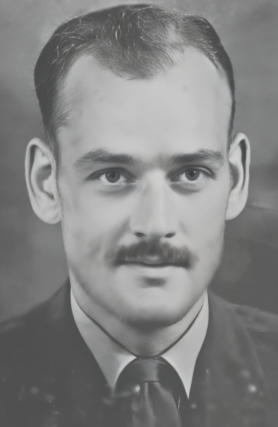
Peter Innes Lowe
Peter Innes Lowe
Captain
74299
32nd Indian Mountain Regiment,
Royal Indian Artillery
February 19, 1915
Halifax, Nova Scotia
Non-Permanent Active Militia: 1937
October 6, 1944
29
Taukkyan War Cemetery, Burma (Myammar)
12. K. 24.
Commemorated on page 369 of the Second World War Book of Remembrance
Displayed in the Memorial Chamber of the Peace Tower in Ottawa on August 6
Peter Innes Lowe was the son of Charles Benjamin Gordon Lowe (1885-1974) and Mary Isabel (Innes)
Lowe (1889-1975) of Halifax, Nova Scotia. He was one of six children, growing up alongside his
siblings Alan Ratherford, Charles Robert, Frank Milton, and Mary Louise. The Lowe family was marked
by both World Wars; a sister, Audrey Florence, died at just 9 days old as a result of shock due to
injuries sustained during the Halifax Explosion on December 6, 1917.
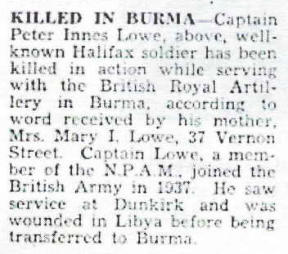
At the outbreak of the Second World War, Peter was already pursuing a military career, having been
appointed the rank of Second Lieutenant on July 2, 1939 (gazetted September 1, 1939). He initially
served with the 1st Halifax Coast Brigade, Royal Canadian Artillery, before deploying with the British
Expeditionary Force in France. During the frantic retreat of 1940, he was among the thousands of
Allied troops successfully evacuated from the beaches of Dunkirk (Operation Dynamo).
His service continued in North Africa, where he served with the Royal Artillery in Libya. After being
wounded in action and subsequently recovering, he demonstrated dedication by volunteering for the
32nd Indian Mountain Regiment of the Indian Artillery. As part of the 14th Army, known as the
"Forgotten Army", Peter transitioned from the desert to the dense, monsoon-drenched jungles of
Southeast Asia. Serving in the Mountain Artillery was a grueling role that required using pack animals
to transport heavy howitzers through terrain that was impassable for vehicles.
In the autumn of 1944, the 14th Army began a major offensive to liberate Burma. It was during this
advance through the Kabaw Valley toward the Chindwin River, an area known for its brutal climate
and fierce rearguard actions, that Captain Lowe was killed in action on October 6, 1944. He was 29
years old. He is buried at the Taukkyan War Cemetery in Burma, the largest Commonwealth war
cemetery in the country. In his hometown of Halifax, Peter Lowe Avenue stands as a lasting tribute
to a local officer who served across three continents and gave his life in the liberation of Burma.
At the time Peter served and died, his unit was officially known as the Regiment of Indian Artillery.
The 'Royal' prefix was granted exactly one year later, in October 1945, as a specific reward for the
regiment's distinguished service throughout the war. While Captain Lowe is now honored as part of
the Royal Indian Artillery legacy, at the time of his sacrifice in the jungles of Burma, his uniform
would have simply borne the title of the Indian Artillery.







- World War I - Menu
- WWI Stories and Articles
- Photos - Yarmouth Soldiers
- Selection of World War I Songs
- WWI Casualties of Yarmouth, NS
- Those Who Served - Yarmouth, NS
- WWI Casualties Digby Co. NS
- WWI Casualties Shelburne Co. NS
- Merchant Mariners (1915) Yarmouth, NS
- Canadian Forestry Corps - Non Yarmouth Birth/Residence Enlistments
- US Draft Registry - Yarmouth NS Born


- World War II - Menu
- WWII Stories and Articles
- Telegraphist Air Gunners
- WWII Casualties of Nova Scotia
- US Casualties with NS Connection
- Far East/Pacific Casualties with NS Connection
- Merchant Navy Casualties Nova Scotia
- Nova Scotia WWII Casualties Holten Canadian War Cemetery
- D-Day Casualties - Nova Scotia
- CANLOAN Program Casualties - Nova Scotia
- Battle of the Bulge Casualties - Nova Scotia
- WWII Casualties Yarmouth NS
- Yarmouth Casualties - RCAF RAF Canadian Army WWII
- Yarmouth Co., Marriages WWII
- Casualties Non-Born/Residents with Connection to Yarmouth Co., Nova Scotia.
- WWII Casualties Digby Co., NS
- Non-Nova Scotian WWII Casualties Buried in Nova Scotia
- WWII RCAF Casualties Aged 16-18
- Brothers/Sisters Who Served - World War II