copyright © Wartime Heritage Association
Website hosting courtesy of Register.com - a web.com company
Wartime Heritage
ASSOCIATION
Remembering World War II
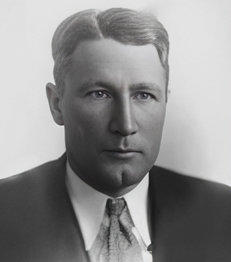
James Montgomery Henderson


Name:
James Montgomery Henderson
Rank:
Able Seaman
Service Number:
Z/27996
Service:
SS Ruth, Merchant Navy
Awards:
Mariner’s Medal
Date of Birth:
July 1, 1902
Place of Birth:
Stormont, Guysborough Co.,
Nova Scotia
Draft registration address:
47 Berwick St, Wyoming, Middlesex Co.,
Massachusetts
Date of Death:
June 29, 1942
Age:
39
Memorial:
Halifax Memorial, Nova Scotia
Reference:
Panel 21
Commemorated on Page 154 of the Merchant Navy Book of Remembrance
Displayed in the Memorial Chamber of the Peace Tower in Ottawa on March 29, August 26, and November 1
James was the son of James Shier Henderson (1858-1920) of Stormont and Pamela (Latham) Henderson
(1869-1918) of Seal Harbour, Guysborough Co., NS, and the brother of older siblings Amy Madeline
Clarissa Henderson (1894-1973), Hilda Maud Henderson (1895-1957), John Howard Henderson (1897-
1918), Annie Pamela Henderson (1899-1984), and William Chipman Henderson (1900-1944).
James’ brother John died of pneumonia during the First World War on May 29, 1918, at the Camp Hill
Hospital in Halifax, Nova Scotia. He was a Stoker onboard HMCS Guelph, Royal Canadian Naval Volunteer
Reserve.
At age 17, James emigrated to the US from Yarmouth, Nova Scotia on the SS Northland, arriving in
Boston, Massachusetts on February 2, 1920. He was granted US citizenship by the US District Court in
Beaumont, Texas on November 14, 1932. His residence at that time was on 6th Street in Port Arthur,
Texas.
On February 13, 1934, James completed his application for a Seaman’s Protection Certificate, which
served as seamen's passport. They were issued at all ocean and Great Lakes ports by the collector of
customs or his deputy, usually in his capacity as shipping commissioner.
On March 19, 1942, when he registered for the US Draft, he was already serving in the Merchant Navy
fleet, employed on the SS Honomu of the Matson Navigation Company (office at Pier 32, San Francisco,
California). He listed his home address as his sister’s home at 47 Berwick St in Wyoming, in Melrose,
Middlesex Co., Massachusetts. He was 5 feet, 8 inches, with a ruddy complexion, blue eyes, and gray
hair.
On the evening of June 28, 1942, the SS Ruth, an American steam-powered merchant freighter, was on
the third leg of a return voyage to Baltimore, Maryland. The ship had taken on a cargo of 5,000 tons of
manganese ore in Rio de Janeiro and had recently made a stop in Trinidad. The unescorted vessel was
about 320 miles north-northeast of Barbuda, maintaining a customary zigzag course at 8.5 knots.
Although traveling alone, the freighter was armed with one 4-inch gun and two .30-caliber guns, which
were manned by a U.S. Navy Armed Guard crew of four Defensively Equipped Merchant Ship (DEMS)
gunners.
The following morning, on June 29, 1942, at 5:55 AM, the SS Ruth was torpedoed by the German
submarine U-153 at position 21°40'N / 59°20'W, roughly 100 miles north of Cape Maisi, Cuba. The
torpedo struck the freighter directly in the stern, causing the ship's ammunition magazine to ignite and
completely blowing the whole stern off. The damage was catastrophic, causing the vessel to sink stern-
first in less than two minutes. The destruction happened so quickly that the 7 officers, 27 crew
members, and 4 gunners had no time to formally abandon ship, much less launch any lifeboats or rafts.
Of the 38 men on board, 34 did not survive the rapid sinking, including Able Seaman James Montgomery
Henderson. This included 31 of the 35 Merchant Mariners, and all 4 of the Navy Armed Guards. Only four
men managed to survive, though historical records offer two different accounts of their initial rescue.
One account states that three of the men swam to a raft that had floated free from the wreckage, while
the fourth man was picked up by the Germans, questioned, and then placed on the raft with the others.
The second account claims that all four men were pulled from the water by the Germans, interrogated,
and then placed together on the raft before being abandoned.
After drifting at sea for several days, the four survivors were rescued on July 4 by the American
destroyer USS Corry (DD-463). The Gleaves-class destroyer transported the men to the Port of Spain,
Trinidad, where they were finally landed on July 7, 1942.
James is listed on Panel 21 of the Halifax Memorial at Point Pleasant Park in Halifax, Nova Scotia.
On his arm, James had a tattoo of a full-rigged ship, homeward
bound, a sailor's eternal hope for a safe return to port. In
maritime lore, a sailor who died at sea was often spoken of as
having finally caught a fair wind for the "ultimate home port", a
peaceful harbor beyond the horizon.
In the US, merchant seamen are also remembered as a whole
with the American Merchant Mariners' Memorial near the East
Coast Memorial located in Battery Park at the southern end of
Manhattan in New York.
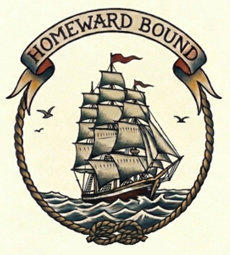
Sample illustration of full-rigged ship,
homeward bound tattoo






- World War I - Menu
- WWI Stories and Articles
- Photos - Yarmouth Soldiers
- Selection of World War I Songs
- WWI Casualties of Yarmouth, NS
- Those Who Served - Yarmouth, NS
- WWI Casualties Digby Co. NS
- WWI Casualties Shelburne Co. NS
- Merchant Mariners (1915) Yarmouth, NS
- Canadian Forestry Corps - Non Yarmouth Birth/Residence Enlistments
- US Draft Registry - Yarmouth NS Born


- World War II - Menu
- WWII Stories and Articles
- Telegraphist Air Gunners
- WWII Casualties of Nova Scotia
- US Casualties with NS Connection
- Far East/Pacific Casualties with NS Connection
- Merchant Navy Casualties Nova Scotia
- Nova Scotia WWII Casualties Holten Canadian War Cemetery
- D-Day Casualties - Nova Scotia
- CANLOAN Program Casualties - Nova Scotia
- Battle of the Bulge Casualties - Nova Scotia
- WWII Casualties Yarmouth NS
- Yarmouth Casualties - RCAF RAF Canadian Army WWII
- Yarmouth Co., Marriages WWII
- Casualties Non-Born/Residents with Connection to Yarmouth Co., Nova Scotia.
- WWII Casualties Digby Co., NS
- Non-Nova Scotian WWII Casualties Buried in Nova Scotia
- WWII RCAF Casualties Aged 16-18
- Brothers/Sisters Who Served - World War II