copyright © Wartime Heritage Association
Website hosting courtesy of Register.com - a web.com company
Wartime Heritage
ASSOCIATION
Remembering World War II
Name:
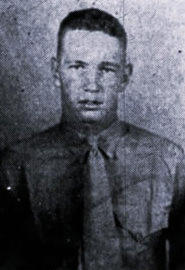
James Alton Faulkingham
Rank:
Corporal
Service Number:
333113
Service:
Company C, 1st Amphibious Tractor Battalion,
3rd Amphibious Corps, United States Marine Corps
Awards:
Navy Cross, Purple Heart
Date of Birth:
November 11, 1920
Place of Birth:
Bangor, Penobscot Co., Maine
Date of Enlistment:
January 28, 1942
Place of Enlistment:
Maine
Address at Enlistment: Bangor, Penobscot Co., Maine
Age at Enlistment:
21
Occupation:
Laborer
Marital Status:
Single
Next of Kin:
Stewart A Faulkingham (Father)
Date of Death:
September 17, 1944
Age:
23
Memorial:
Manila American Cemetery and Memorial, Philippines
Reference:
Walls of the Missing, Memorial
James was the son of Stewart Aaron Faulkingham (1897-1955), and Louise (Williams) Faulkingham (1897-
1973). His father was born in LaHave, Lunenburg Co., Nova Scotia and his mother was born in New
Brunswick. His siblings were Louise Agnes Faulkingham (1919-2007), Ella Grace Faulkingham (1922-2006),
Pearl Frances Faulkingham (1924-1961), and Leo Stewart Faulkingham (1926-1990). James was named after
his grandfather James Alton Faulkingham (1873-1940), born in LaHave, Lunenburg Co.
His father served as a Boatswain’s Mate 2nd Class in the US Navy in World War I from April 12, 1917 to July 9,
1919 including service on the USS Vermont (Service No. 1502152). His brother Leo enlisted on July 7, 1943,
at the age of 17, in World War II. Leo served as a Machinist's Mate Third Class in the U.S. Navy’s 63rd
Construction Battalion, of the Navy Construction Battalion Corps known as the Seabees, which included a
deployment to the Aleutian Islands.
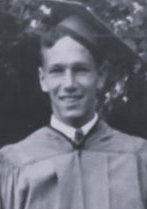
James grew up in the family home at 310 Grove Street in Bangor, and attended the
Abraham Lincoln Grammar School until 1935, and attended Bangor High School,
graduating in 1939.
The family’s recollection is that James signed up to serve on December 17, 1941 in
Maine; ten days after the attack on Pearl Harbor. Following the attack on December
7, 1941, recruiting stations were completely overwhelmed. When Corporal
Faulkingham went to join on December 17, he filled out his paperwork, passed his
initial physical, and was accepted into the Marine Corps.
Because of the large number of volunteers in December 1941, the military could
not physically process, swear in, or transport men to recruit depots, including Parris Island, immediately. Men
were often accepted, told they were in the Marines, and then placed on a waiting list or sent home for a few
weeks until training capacity opened up. In James’ case, he officially enlisted January 28, 1942, in Boston,
Massachusetts.
James joined the 6th Recruit Battalion for initial training at Parris Island, near Beaufort, South Carolina, and
was also stationed in New River, North Carolina, as a ground unit crewman. Later, he was promoted to
Corporal and became a crew chief. He was transferred to San Francisco, California prior to being deployed in
the Pacific theatre of war. He served with Company C of the 1st Amphibious Tractor Battalion in the 3rd
Amphibious Corps.
Operation Forager was the overarching strategic U.S. military offensive in the Pacific Theater, executed
between June and November 1944, with the primary objective of capturing the Mariana Islands (specifically
Saipan, Guam, and Tinian) and the Palau Islands to secure vital airfields and sea lanes for the push toward the
Philippines.
Within that broader framework, the assault on Peleliu Island (Operation Stalemate 2) took place from
September to November 1944.Corporal James Alton Faulkingham and the 1st Amphibian Tractor Battalion
fought in a critical flanking role to protect the lower right flank of the American forces advancing on the
Philippines.
James fought in the Battle of Peleliu, and died of wounds from a mine in Palau, on September 17, 1944.
For his actions, James was awarded the US Navy’s highest honor, the Navy Cross. The details of the Medal
being ordered are as follows.
Commander in Chief Pacific Forces, March 8, 1945:
The President of the United States of America takes pride in presenting the Navy Cross (Posthumously) to
Corporal James Alton Faulkingham (MCSN: 333113), United States Marine Corps, for extraordinary heroism as
Amphibian Tractor Crew Chief serving with the First Amphibian Tractor Battalion, Third Amphibious Corps,
Fleet Marine Force, during action against enemy Japanese forces at Peleliu Island, Palau Group, from 15 to 17
September 1944. Taken under fire by a superior number of Japanese snipers while engaged in carrying
supplies to the front lines through heavily mined terrain, Corporal Faulkingham fought valiantly in the face of
tremendous odds. Upon observing the approach of a hostile tank, firing savagely on our infantrymen, he
unhesitatingly charged the weapon, disabling it with a fifty-caliber machine gun, shooting the turret gunner
with a carbine and completing the destruction by hurling a hand grenade directly into the enemy tank.
Although injured during this encounter, Corporal Faulkingham continued his mission of moving urgently
needed supplies through the mined areas partially controlled by the Japanese until 17 September when he
sustained severe wounds during the explosion of his tank by a hostile mine. His daring aggressiveness and
cool courage in the face of grave peril were in keeping with the highest traditions of the United States Naval
Service. He gallantly gave his life for his country.
James’ Naval Cross was presented to his mother in 1946.
James, buried at sea, is memorialized on the Panels of the Missing at the Manila American Cemetery and
Memorial in the Philippines. He is also remembered on the Bangor WWII War Memorial, and the Purple Heart
James Alton Faulkingham

Source:
US Marine Corps Muster Rolls, 1798-1958
findagrave.com
honorstates.org
YouTube video - James Alton Faulkingham







- World War I - Menu
- WWI Stories and Articles
- Photos - Yarmouth Soldiers
- Selection of World War I Songs
- WWI Casualties of Yarmouth, NS
- Those Who Served - Yarmouth, NS
- WWI Casualties Digby Co. NS
- WWI Casualties Shelburne Co. NS
- Merchant Mariners (1915) Yarmouth, NS
- Canadian Forestry Corps - Non Yarmouth Birth/Residence Enlistments
- US Draft Registry - Yarmouth NS Born


- World War II - Menu
- WWII Stories and Articles
- Telegraphist Air Gunners
- WWII Casualties of Nova Scotia
- US Casualties with NS Connection
- Far East/Pacific Casualties with NS Connection
- Merchant Navy Casualties Nova Scotia
- Nova Scotia WWII Casualties Holten Canadian War Cemetery
- D-Day Casualties - Nova Scotia
- CANLOAN Program Casualties - Nova Scotia
- Battle of the Bulge Casualties - Nova Scotia
- WWII Casualties Yarmouth NS
- Yarmouth Casualties - RCAF RAF Canadian Army WWII
- Yarmouth Co., Marriages WWII
- Casualties Non-Born/Residents with Connection to Yarmouth Co., Nova Scotia.
- WWII Casualties Digby Co., NS
- Non-Nova Scotian WWII Casualties Buried in Nova Scotia
- WWII RCAF Casualties Aged 16-18
- Brothers/Sisters Who Served - World War II