copyright © Wartime Heritage Association
Website hosting courtesy of Register.com - a web.com company
Wartime Heritage
ASSOCIATION

Name:
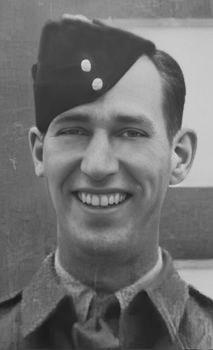
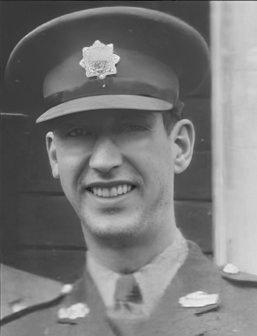
Girvan Fraser Archibald
Rank:
Lieutenant
Service:
West Nova Scotia Regiment, RCIC
Date of Birth:
June 11, 1915
Place of Birth:
Marquis, Moose Jaw Division, Saskatchewan
Date of Enlistment:
September 26, 1932 (pre-war)
September 6, 1939 (WWII)
Place of Enlistment:
Wellington Barracks, Halifax, Nova Scotia
Address at Enlistment:
Stellarton, Pictou Co., Nova Scotia
Age at Enlistment:
17
24 (Active service, WWII)
Occupation:
Labourer
Marital Status:
Single (at enlistment)
Religion:
United
Next of Kin:
Alice Archibald (Mother)
Date of Death:
December 20, 1943
Age at Death:
28
Cemetery:
Rome War Cemetery, Rome, Italy
Grave:
I, B, 9
Girvan Fraser Archibald was the son of Lester Ward Archibald (born in Alma, Nova Scotia, 1886–1921) and Alice
(Hatfield) Fraser Culton (1888–1971). He was the brother of Melvin Irwin Archibald (1916–1927), Norma
Glendine Archibald Fulmer (1918–2002), and infant William Archibald (1920). He married Pansy Olive (Hayden)
Archibald (born 1908), of Pictou, Nova Scotia in 1938.
His grandparents were from Pictou County, and although his parents left Nova Scotia for Saskatchewan in 1910
to homestead north of Marquis, Girvan’s ties to Pictou County remained strong throughout his life.
He enlisted on September 26, 1932, in Stellarton, Pictou County, joining the Pictou Highlanders. He served
with the regiment until August 1, 1935. On August 2, 1935, he re‑attested at Aldershot, Kings County, with the
Royal Canadian Regiment. He was promoted to Lance Corporal in June 1937, qualified as a Signaller in
November 1937, and re‑engaged with the RCR at Connaught Ranges, Ontario, on August 2, 1938. In 1939 he
advanced through the ranks of Corporal, Acting Sergeant, and Sergeant. He received his commission as a
Second Lieutenant (Provisional) on October 10, 1942, and was confirmed as a Lieutenant on November 13,
1942.
He departed Canada on June 10, 1943, arriving in the United Kingdom on June 18, 1943. He left the UK for
the Mediterranean on September 17, 1943, and disembarked on September 24, 1943.
Before joining the fighting in Italy, he was posted on October 3, 1943, to the Allied School of Infantry at Aïn
Smara in the Constantine region of Algeria. Established after the North African landings of Operation Torch in
November 1942, the school provided advanced infantry training tailored to the conditions of the
Mediterranean and Italian campaigns.
He was mortally wounded in action at The Gully on December 17, 1943, and died of wounds as a prisoner of
war on December 20, 1943.
The fighting at The Gully occurred during the Canadian advance toward Ortona in December 1943, part of the
broader Allied effort to break through the German Winter Line in central Italy. The terrain south of Ortona
forced attacking units into narrow approaches dominated by well‑prepared German defensive positions. The
Gully itself was a deep ravine reinforced with machine‑gun posts, mortars, and infantry dug‑in along the
banks, making it one of the strongest German positions on the route north. Canadian units were required to
make repeated assaults in difficult winter conditions, often gaining only small amounts of ground at high cost.
A contemporary account of the battle recorded:
“At 4 pm on Dec. 17th, the West Novas, numbered 160 all ranks,
rose out of their water-logged slit trenches and advanced once
more through those fatal muddy vineyards before the gully. For
support, they had exactly three tanks. What followed is a story of
individual and collective heroism too long to narrate in these
pages, and in this long battle for Ortona it was an old story after
all. Led by their devoted band of surviving officers and NCO’s, the
West Novas beat and brook in blood on the stout defences of the
crossing. Some of them actually got inside the German positions.
But they had lost one fifth of their effectives in a few minutes and
there was no choice but to withdraw or be annihilated. To
Brigadier Gibson, watching the fight from West Nova HQ, Major
Waterman returned with the grim story. The wounded included
Captains R.W. Bullock, D.W.R. Dodge, and Lieutenants E.A. Haines,
R. E. Logan, and G. E. Romkey, while Lt. G. F. Archibald, mortally
wounded in the enemy positions, died in a German first aid post
some time later.”
His service file records that he died of wounds at the Luftwaffe Hospital at Rome Monte Mario.
On June 24, 2014, the Government of Saskatchewan named Archibald Lake in his honour, ensuring that his
service and sacrifice are remembered in the province where his family once homesteaded.
Girvan Fraser Archibald

Remembering World War II
Sources:
Raddall, Thomas, (1948), West Nova Scotia Regiment: A History
Service file: Girvan Fraser Archibald






- World War I - Menu
- WWI Stories and Articles
- Photos - Yarmouth Soldiers
- Selection of World War I Songs
- WWI Casualties of Yarmouth, NS
- Those Who Served - Yarmouth, NS
- WWI Casualties Digby Co. NS
- WWI Casualties Shelburne Co. NS
- Merchant Mariners (1915) Yarmouth, NS
- Canadian Forestry Corps - Non Yarmouth Birth/Residence Enlistments
- US Draft Registry - Yarmouth NS Born


- World War II - Menu
- WWII Stories and Articles
- Telegraphist Air Gunners
- WWII Casualties of Nova Scotia
- US Casualties with NS Connection
- Far East/Pacific Casualties with NS Connection
- Merchant Navy Casualties Nova Scotia
- Nova Scotia WWII Casualties Holten Canadian War Cemetery
- D-Day Casualties - Nova Scotia
- CANLOAN Program Casualties - Nova Scotia
- Battle of the Bulge Casualties - Nova Scotia
- WWII Casualties Yarmouth NS
- Yarmouth Casualties - RCAF RAF Canadian Army WWII
- Yarmouth Co., Marriages WWII
- Casualties Non-Born/Residents with Connection to Yarmouth Co., Nova Scotia.
- WWII Casualties Digby Co., NS
- Non-Nova Scotian WWII Casualties Buried in Nova Scotia
- WWII RCAF Casualties Aged 16-18
- Brothers/Sisters Who Served - World War II