copyright © Wartime Heritage Association
Website hosting courtesy of Register.com - a web.com company
Wartime Heritage
ASSOCIATION

Norman Cocking

Remembering World War II
Sources:
Canadian Virtual War Memorial
Nova Scotia, Canada, Births, 1840-1921
UK, Commonwealth War Graves, 1914-1921 and 1939-1947
UK, World War II Index to Allied Airmen Roll of Honour, 1939-1945
findagrave
Name:
Norman Cocking
Rank:
Corporal
Service Number:
542816
Service:
Headquarters, British Air Forces in France,
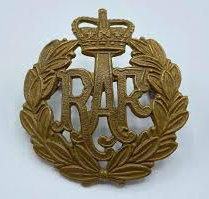
Royal Air Force
Date of Birth:
February 24, 1919
Place of Birth:
Halifax, Halifax Co., Nova Scotia
Date of Enlistment:
Unknown
Place of Enlistment:
England
Address at Enlistment:
Gloucestershire, England
Age at Enlistment:
20-21
Date of Death:
June 17, 1940
Age:
21
Memorial:
Runnymede Memorial Surrey, England
Reference:
Panel 21
Commemorated on Page 602 of the Second World War Book of Remembrance
Displayed in the Memorial Chamber of the Peace Tower in Ottawa on December 21 and 22
Norman Cocking was the son of Thomas Cocking (1890-1981) and Lydia (Carpenter) Cocking (1898-1979), and
the brother of Stephen Cocking (1923-1953), and Jean Cocking (b. 1928).
His father was born in Louth, Lincolnshire, England, and his mother, in Coleford in Gloucestershire. His father
served as a stoker in the Royal Navy during the First World War. The family was living in Halifax, Nova Scotia, in
1919 when Norman was born in February of 1919.
By 1921, the family had returned to the UK. In 1935, Norman worked for the Royal Mail and was living in
Lydney, Gloucestershire. At the time of his enlistment, he was living in Coleford, Gloucestershire.
After enlisting in the Royal Air Force, Norman was stationed with the Headquarters of the British Air Forces in
France (BAFF) in May and June of 1940, early in the Second World War during the fall of France.
The headquarters of BAFF were at Chauny, next to the HQ of François d'Astier de La Vigerie, the French air
commander, to maximise co-operation between the BAFF and the French Armée de l'Air. BAFF HQ moved to
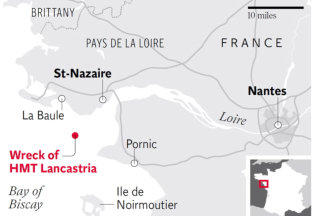
Coulommiers, thence to Château Rezé, Pornic south of Nantes on June 16, 1940. The Advanced Air Striking
Force (AASF) HQ was based at Château Polignac near Reims, moved to Troyes on May 15, Muides near Blois on
June 3, and finally Nantes on June 10th.
In addition to Operation Dynamo (May 26-June 4, 1940) at Dunkirk and the lesser‑known Operation Cycle (June
10-13, 1940) from Le Havre, a series of smaller withdrawals took place along the northern and western coasts
of France. The final phase of these efforts was conducted under Operation Aerial (June 14-25, 1940), which
evacuated Allied troops and civilians from the ports of St. Nazaire, Nantes, Brest, La Pallice, and Bordeaux.
Norman was one of over 6000-9000 military personnel and civilians attempting to flee France, evacuating on
the RMT Lancastria.
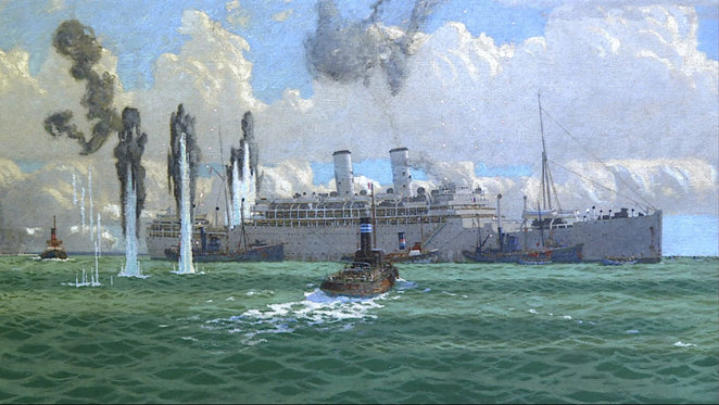
On June 17, 1940, the RMS Lancastria was sunk by German aircraft shortly after departing Saint‑Nazaire. Bomb
strikes caused the ship to capsize and sink rapidly, trapping thousands inside. More than 4,000 people are
believed to have died in what remains Britain’s worst maritime disaster. Although 2,477 survivors were
recorded, the true number of those lost cannot be
determined.
Winston Churchill ordered news of the tragedy to be
suppressed. He later admitted in his memoirs that he
feared the public could not absorb another catastrophe so
soon after Dunkirk, saying there had been “quite enough
disaster for today.” As a result, the scale of the loss was
not reported in British newspapers at the time, and details
remained censored for years.
Several accounts describe how, amid the chaos of the
sinking, groups of soldiers and evacuees began singing patriotic songs. One often‑repeated detail recalls men
trapped on deck or clinging to the hull joining in “There’ll Always Be an England” as the ship listed and began
to go down. Other testimonies remember that as the vessel started to capsize, voices rose to sing “Roll Out the
Barrel.”
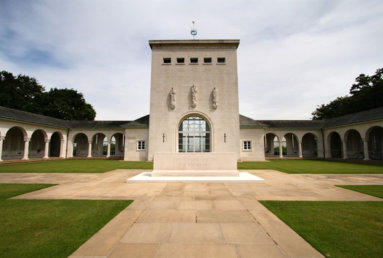
A Royal Air Force casualty, Corporal Norman Cocking is remembered on the Runnymede Memorial which
commemorates over 20,000 service men and women of the Commonwealth air forces who died during
operations from bases in the UK and Europe, with many having no known grave.






- World War I - Menu
- WWI Stories and Articles
- Photos - Yarmouth Soldiers
- Selection of World War I Songs
- WWI Casualties of Yarmouth, NS
- Those Who Served - Yarmouth, NS
- WWI Casualties Digby Co. NS
- WWI Casualties Shelburne Co. NS
- Merchant Mariners (1915) Yarmouth, NS
- Canadian Forestry Corps - Non Yarmouth Birth/Residence Enlistments
- US Draft Registry - Yarmouth NS Born


- World War II - Menu
- WWII Stories and Articles
- Telegraphist Air Gunners
- WWII Casualties of Nova Scotia
- US Casualties with NS Connection
- Far East/Pacific Casualties with NS Connection
- Merchant Navy Casualties Nova Scotia
- Nova Scotia WWII Casualties Holten Canadian War Cemetery
- D-Day Casualties - Nova Scotia
- CANLOAN Program Casualties - Nova Scotia
- Battle of the Bulge Casualties - Nova Scotia
- WWII Casualties Yarmouth NS
- Yarmouth Casualties - RCAF RAF Canadian Army WWII
- Yarmouth Co., Marriages WWII
- Casualties Non-Born/Residents with Connection to Yarmouth Co., Nova Scotia.
- WWII Casualties Digby Co., NS
- Non-Nova Scotian WWII Casualties Buried in Nova Scotia
- WWII RCAF Casualties Aged 16-18
- Brothers/Sisters Who Served - World War II