copyright © Wartime Heritage Association
Website hosting courtesy of Register.com - a web.com company
Wartime Heritage
ASSOCIATION
Remembering World War I
Yarmouth Connections

Name:
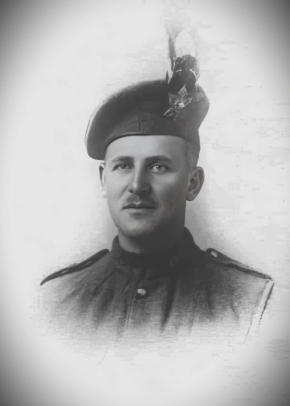
Edwin Woollard
Regimental Number:
283236
Rank:
Private
Service:
219th Battalion/85th Battalion;
Date of Birth:
August 23, 1892
Place of Birth:
Richmond, Nova Scotia
Date of Enlistment:
March 28, 1916
Place of Enlistment:
Yarmouth, Nova Scotia
Address at Enlistment:
South Ohio, Nova Scotia
Age at enlistment:
23
Height:
5 Feet 8 Inches
Complexion:
Light
Eye Colour:
Light Blue
Hair Colour:
Light Brown
Prior Military:
29 Battery, C.F.A. Yarmouth NS
Trade:
Butcher
Marital Status:
Married
Religion:
Baptist
Next of Kin:
Mrs Elsie Woollard (Wife), South Ohio, Nova Scotia
Date of Death:
October 30, 1917
Cause of Death:
Missing, presumed Killed at Passchendaele
Age at Death:
25
Memorial:
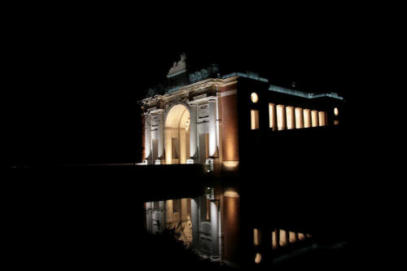
Menin Gate (Ypres) Memorial, Belgium (Panel 26 - 30)
Listed on the Nominal Roll of the 219th Battalion.
Commemorated on Page 353 of the First World War Book of Remembrance
Displayed in the Memorial Chamber of the Peace Tower in Ottawa on July 30 and July 31
Edwin Woollard was the son of Captain Frank Woollard (1856-1927) and Clara E Spinney (1861-1892), and the
brother of Guy L Woollard (1885-1987).
Edwin was married to Elsie Lilah (Crosby) Woollard (1893-1979), of South Ohio, Yarmouth Co., Nova Scotia, in
1913.
He enlisted at Yarmouth with the 219th Battalion Highland Battalion on March 28, 1916, and trained with the
Halifax Branch. In July he was promoted to Corporal. He embarked Canada on October 12th and disembarked
in the United Kingdom on October 18th.
While at Witley Camp he was appointed as acting Corporal and transferred to the 17 Reserve Battalion at
Bramshott. On April 21, 1917, he reverted to Private and proceeded overseas for service with the 85th
Battalion arriving in France on April 22nd. On September 16th he served as a Batman to an Officer on course
at a Divisional School, returning to the 85th Battalion in the field on September 30th.
He was reported wounded and missing in action on October 30, 1917 during the Battle of Passchendaele.
With no known grave, he is remembered on the Menin Gate Memorial and on a family grave marker including
his mother’s grave at the Port Maitland and Beaver River Cemetery in Yarmouth Co., NS.
The following letter was received by his wife, Elsie in April, 1918:
Edwin Woollard


France, March 27, 1918
Dear Mrs. Woollard
I am going to write a few lines and give you what information I can about your husband.
We are in the front lines trenches and I am writing this in my dugout. I was going to
wait until we got out of the line but we never know when that will be, so i will try and tell
you what little I know about your husband.
He was a man we all knew and all liked. As he was attached to our medical office for a
few weeks we knew him well and since the Battle of Passchendaele we have all hoped for the
best. But now it is useless to hope for I think, Mrs. Woollard, that your husband has paid the
supreme sacrifice and has given his life for his God and country.
Well I do remember the morning of the 39th October and never will I forget it as long as
I live. At 9:40 our big guns spoke and we were away in that hell of bursting shells and flying
shrapnel. We were only able to advance a few hundred yards when we were held up by the
Germans for a period of twenty minutes. It was only then that we had all our casualties and
it was then that the stretcher bearers were busy.
I am a B Company stretcher bearer but our company was right next to your husband’s
Company and in the battle I got in with that Company.
I saw your husband lying in a shell hope and when he saw me he waved his hand for me
to hurry up and come to him, but I had a good many cases to look after before I could get to
where he was.
When I finally got there I found him lying in the side of a shell hole in water up to his
knees and helpless. The first thing I did was to get him out of the hole with the help of a
German Red Cross prisoner, who by the way, helped me to dress his wounds and stayed with
me for over a half hour.
When I finally got to Mr. Woollard’s wounds I found that he was wounded in two places
in the left leg close up to the body and in the back. That was the worst one, if not fatal. It
took us some time but your husband took it all fine. The only thing he said was, “I am all in”.
I told him not to worry and he would make “Blighty”all right.
After dressing his wounds I covered him up with his greatcoat and told him that the
stretcher parties would soon pick him up. I had lots of work to do so I had to leave him and
that was the last I saw of him.
It was some time before our stretcher bearers were able to get on that hillside to pick
up the wounded and in that time the German artillery had got busy and were pounding that
side of the hill all to pieces.
I really think that hill or ridge changed its face of nature about ten times in the next
twenty-four hours and should your husband have lived I am afraid that another shell would
have finished its deadly work.
But, Mrs. Woollard, I think the wound your husband got was fatal. There is no possible
chance that he was taken prisoner for our front line was then about 500 yards in front of
where he was wounded and if he had got out, the system that the hospitals have should have
let you know at once.
I am sorry if this letter has hurt you, Mrs. Woollard, but I thought you would want the
plain facts and I have given them to you as it was. I regret that I haven’t that German Red
Cross fellow’s name for he was a man if ever there was one in Germany.
So, now, Mrs. Woollard, I think we will have to resign ourselves to the fact that your
husband has gone to a better front where all is peace and quiet and there he awaits your
coming and all we can do is to “carry on” until our Father calls us home to live with Him. If
there is anything more you would like to know I would be only too pleased to tell you but I
think I have told you all.
I am,
Yours very truly,
Pte. Gerald B. Mills
85th Battalion
Sources:
Canadian Virtual War Memorial


- World War I - Menu
- WWI Stories and Articles
- Photos - Yarmouth Soldiers
- Selection of World War I Songs
- WWI Casualties of Yarmouth, NS
- Those Who Served - Yarmouth, NS
- WWI Casualties Digby Co. NS
- WWI Casualties Shelburne Co. NS
- Merchant Mariners (1915) Yarmouth, NS
- Canadian Forestry Corps - Non Yarmouth Birth/Residence Enlistments
- US Draft Registry - Yarmouth NS Born


- World War II - Menu
- WWII Stories and Articles
- Telegraphist Air Gunners
- WWII Casualties of Nova Scotia
- US Casualties with NS Connection
- Far East/Pacific Casualties with NS Connection
- Merchant Navy Casualties Nova Scotia
- Nova Scotia WWII Casualties Holten Canadian War Cemetery
- D-Day Casualties - Nova Scotia
- CANLOAN Program Casualties - Nova Scotia
- Battle of the Bulge Casualties - Nova Scotia
- WWII Casualties Yarmouth NS
- Yarmouth Casualties - RCAF RAF Canadian Army WWII
- Yarmouth Co., Marriages WWII
- Casualties Non-Born/Residents with Connection to Yarmouth Co., Nova Scotia.
- WWII Casualties Digby Co., NS
- Non-Nova Scotian WWII Casualties Buried in Nova Scotia
- WWII RCAF Casualties Aged 16-18
- Brothers/Sisters Who Served - World War II